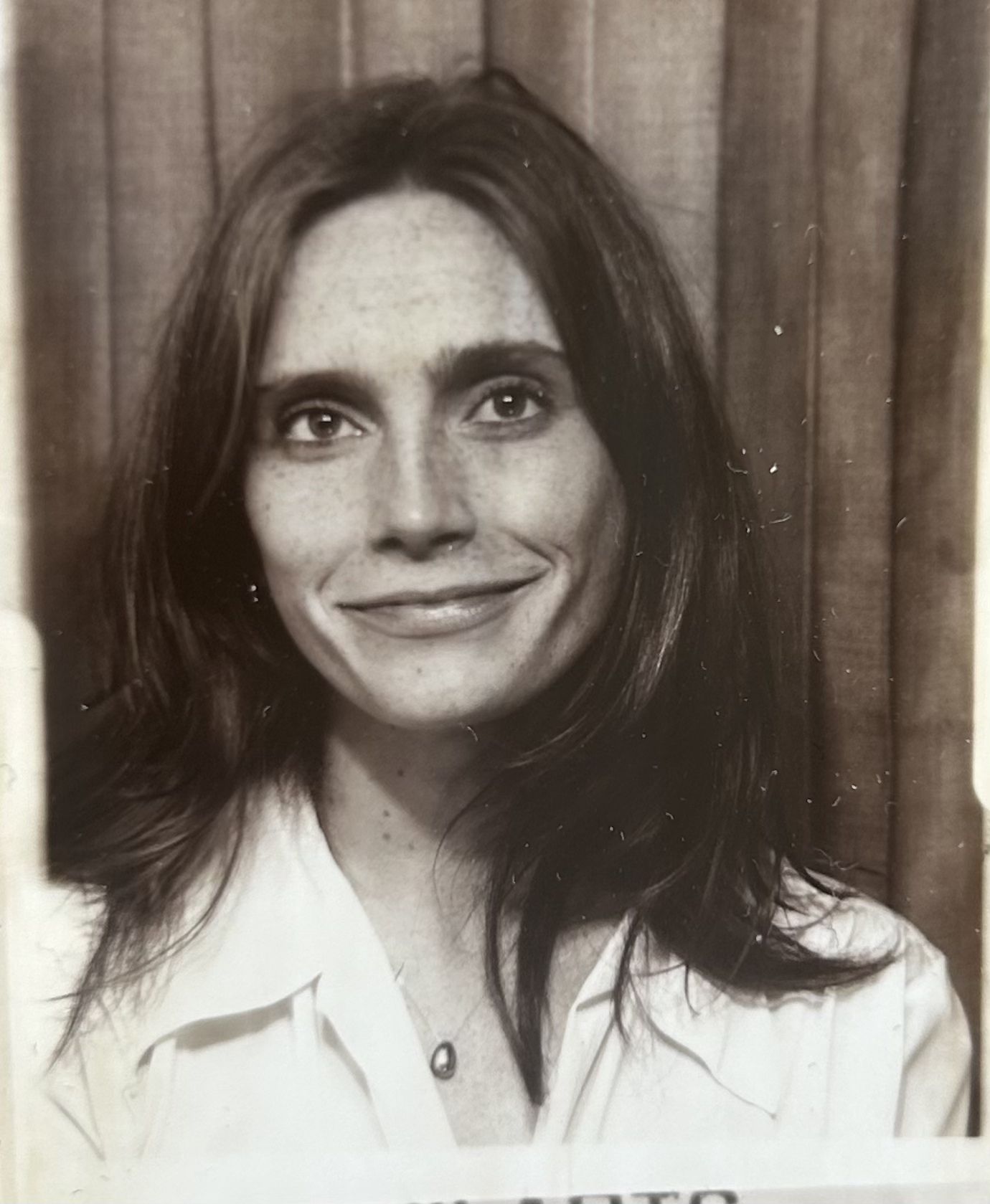
Over the course of our Spring 2026 semester, our undergraduate interns had the opportunity to contribute to The Iowa Review‘s online publication, Switchgrass. First up, we have Lynne Inouye (’26), who interviewed Maeve Barry, winner of the 2025 Iowa Review Award for Fiction.
Lynne Inouye/The Iowa Review: Your piece “Tank (A Triptych)” has a distinct structure, following our main character from early childhood, to young adulthood, and then to old age. What drew you to this format? And like the titular triptych, how does each scene hinge together to form a larger work?
Maeve Barry: I think this piece started with the idea of the tank—a place the narrator feels drawn to, then averse to, that then keeps pulling her back—and the idea of a tank as a container for a triptych just kind of made sense to me. A sort of fluid, subconscious narrative within a contained form. I wanted three specific moments/ scenes that were tied to one place, and to water. I also liked thinking of different kinds of tanks; the literal tank the narrator performs in at Weeki Wachee, and smaller metaphorical tanks within the narrative. The three sections of her life also become their own little tanks. I then found it really fun to have different objects and images recur through the three sections, sort of illustrating the way obsessions and ideas follow us, even when we think we’ve changed. I had fun working towards a sense of cohesion between the sections without filling in all the gaps.
TIR: Often I think people shy away from writing children, especially in first-person narration. But in this piece—as well as your story “Girabella” in The Sewanee Review—you use young narrators to great effect. What do child characters reveal that adults cannot? In “Tank (A Triptych),” how does her childhood set up those obsessions and ideas see later on?
MB: There’s this quote from Viktor Shklovsky about how art can “make the stone stony” again, which I think is about defamiliarization, or looking at something so closely that it’s brought back into life. When you’re a kid, so much is already defamiliarized, and can feel really strange or magical or uncanny. I think writing from the perspective of a child sometimes helps us really look at something, in a way that often feels more “stoney,” and helps us avoid assuming people already know what we’re talking about or just using shorthand to describe a feeling or object or place.
With “Tank” specifically, I was interested in how something that can seem so magical and glamorous as a child starts to look different when you’re older and need to make a living and are working within the material realities of a job. When I was little I really wanted to be Cinderella at Storyland in New Hampshire. Then I started thinking about how it feels when this idealized costume, viewed from one’s childhood, becomes a job. I used to do ballet and was obsessed with dancers in their buns and stage makeup wearing really boxy, trash bag pants to warm up. I think I’ve always been interested in the practical realities behind things that seem glamorous and placing them up close to each other. So starting the triptych in childhood and then moving into the mermaid world as the narrator’s job felt like a way to show how through economic reality our perspectives change, and then what of the magic/idealization of childhood continues to creep back up. Like how at every age we see the narrator wants to be in the water. As a child and a young adult, her life is full of projection, and the idea that she’d be happier if she were someplace else.
TIR: We do see certain characters—Lacy or the narrator’s own daughter—who do go someplace else. What impact do they have on the narrative?
MB: I think having characters like Lacy and the narrator’s daughter in motion can help show all the swirling movement around the narrator, and how stagnant she might feel in contrast.
TIR: More broadly speaking, what themes in “Tank” are recurring in your other work? What felt new?
MB: I think a lot of my stories focus on characters who feel a bit desperate to leave their own world, and so seek attention/recognition through some sort of performance. I also write a lot about childhood, and mothers and daughters. And swimming. I’ve never written something that features the same character in both childhood and old age, or about mermaids.
TIR: Could you elaborate on your interest in swimming? In “Tank,” it seems to represent the idealization of childhood, but how does its meaning shift for you—across stories like “Aquarium” in The Brooklyn Review or other work? How is water tied to that element of performance?
MB: That’s a good question, and I’m not really sure of the answer, but I think I do a lot of my favorite in-head writing if I can do it while swimming, and so maybe that’s why I write a lot of scenes that take place during a swim. I think a lot of my characters actually aren’t performing while swimming, and it’s a time when they feel more at ease in themselves in their bodies. So maybe that’s where the idealization of childhood comes into play, although I still think you can feel pretty weird in/about your body as a kid. In sort of a basic, elemental way, swimming is a return to a womb-like space (which is another tank/water image I was playing with in the Tank triptych.) Also, it just makes me happy when I read or watch something that involves a pool!
TIR: Last question—is there anything else you want to share about “Tank (A Triptych),” your writing practice, or future work?
MB: Thank you so much for all of these thoughtful questions and for reading my story so closely! Hmm…one thing is that I’ve been lucky enough to be in Italy for the last few weeks at a residency with the Giancarlo DiTrapano foundation, and so I’ve been looking at a lot of Catholic art, many of which are triptychs, some depicting the Annunciation and Jesus’s baptism. I wish I had been thinking about those things when writing, but I wasn’t, but it’s been cool to see all these historical pregnancy and water-based triptychs. When I started working on “Tank” I had a cold and was really brain-foggy and couldn’t write anything so I just watched every documentary about mermaid performers and said I was working on a story. Then, when I wasn’t sick, the story kind of just came out in a burst. Some other fun “Tank” news is that my genius writer friend Miranda Rivett is currently adapting the story into a screenplay. I just read an early draft and loved it way more than my story. This is the first time I’ve had something of mine adapted, and it’s so fun to watch her understand my work in a way that feels even clearer than I do!
*
Maeve Barry has won the annual fiction prizes from The Iowa Review, The Sewanee Review and Ninth Letter. Her stories also appear in Post Road Magazine, FENCE, The Brooklyn Review and Rose Books Reader, among other places. She was recently a resident of the Giancarlo DiTrapano Foundation, where she worked on her first novel.